What is TalentSage? AI Hiring Platform Explained
Most organisations that struggle with hiring do not struggle because their recruiters are bad at their jobs. They struggle because the process itself has no structure. Applications arrive in volume and get reviewed by different people using different criteria on different days. Strong candidates sit in inboxes for a week before anyone looks at them. Interview feedback gets collected informally, if it gets collected at all. Hiring managers make final decisions based on incomplete information, and nobody can tell you afterward why one candidate was chosen over another.
This is not a small problem. According to research from the Society for Human Resource Management, the average cost of a bad hire is equivalent to roughly 30 percent of that employee’s first-year salary. For a role paying $80,000 a year, that is $24,000 lost on a single decision. Multiply that across a team that hires 50 people a year and the exposure becomes significant before you account for the downstream effects on team productivity, client relationships, and culture.
VisionTact built TalentSage to address this problem directly. Not by adding more tools to a process that is already fragmented, but by replacing the process with something structurally different.
The Real Cost of Unstructured Hiring
The word “unstructured” sounds mild. In practice it describes a hiring environment where every recruiter operates slightly differently, where there is no shared system enforcing accountability at each stage, and where the quality of the outcome depends almost entirely on who happens to be managing that particular search at that particular moment.
Unstructured hiring has four consistent failure points that show up across industries and geographies.
The first is screening without a framework. When applications arrive and reviewers have no consistent scoring criteria, the process defaults to subjective impression. Candidates who present well on paper but are a poor fit advance. Candidates who are an excellent fit but whose CVs are formatted unusually get passed over. The shortlist reflects individual bias more than it reflects candidate quality.
The second is poor pipeline visibility. Hiring managers often have no clear view of where their open roles stand. They ask recruiters for updates in meetings. Recruiters spend time pulling information together rather than moving candidates forward. The bottlenecks are invisible until they become delays.
The third is slow coordination. Interview scheduling happens over email threads that grow to 15 messages before a slot is confirmed. Follow-ups get missed. Candidates who are ready to move within 48 hours wait five days for a response and accept an offer elsewhere. The time cost is not just about internal efficiency. It is about candidate experience at a moment when the best talent has options.
The fourth is inconsistent final decisions. When hiring panels do not compare candidates using the same criteria and the same structured data, final decisions tend to reflect whoever argues most persuasively in the debrief meeting rather than whoever the evidence actually supports.
TalentSage was built to eliminate all four of these failure points within a single platform
Why Traditional ATS Platforms Fall Short
Applicant tracking systems have existed for decades. Most large enterprises already have one. So it is worth being specific about why TalentSage is different from the standard ATS tools that HR teams have used for years.
Traditional ATS platforms were designed to manage the administrative side of recruitment: posting jobs, collecting applications, storing candidate records, and tracking where people are in a pipeline. They do this reasonably well. What they do not do is make the hiring process structurally better.
A standard ATS gives a recruiter a place to log that they reviewed a CV. It does not help them review it more consistently. It gives a hiring manager a view of a candidate list. It does not give them a structured basis for comparing those candidates. It stores interview notes. It does not ensure that those notes are collected to a standard that supports a defensible final decision.
The result is that most organisations using a traditional ATS still have an unstructured hiring process. They have just moved the paperwork online.
TalentSage is built differently. The AI layer is not a reporting function added on top of a database. It is embedded in the workflow from the moment an application arrives. The structure is not optional. It is the default.
What TalentSage Actually Does
TalentSage combines four capabilities that individually make hiring better and together make it fundamentally more reliable.
Intelligent candidate screening
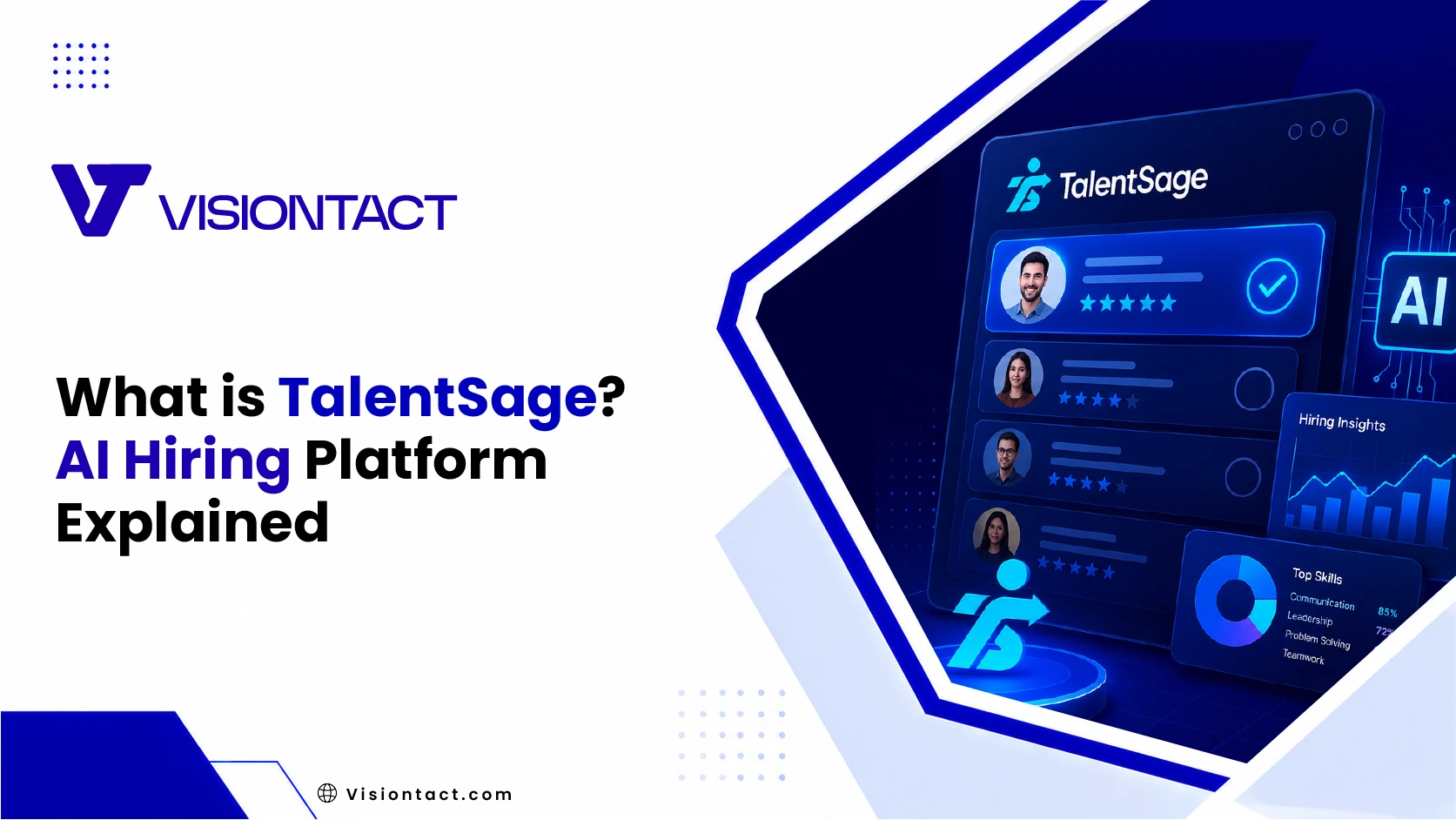
When a candidate applies for a role, TalentSage reviews and scores the application automatically against the criteria set for that position. Recruiters do not receive a raw pile of CVs to sort through manually. They receive a prioritised shortlist with AI-generated assessments that explain why each candidate ranked where they did.
This does not replace recruiter judgment. It focuses it. Instead of spending the first three hours of a search manually reading 200 applications, a recruiter can spend those three hours actually evaluating the 20 candidates the AI has surfaced as the strongest matches. The time saving is significant. The quality improvement is more significant.
Structured recruiter workflows
Every stage of the hiring process in TalentSage follows a defined path. When a role is opened, the team configures the stages, the evaluation criteria at each stage, and the workflow rules that govern how candidates move forward or are declined. From that point, every recruiter working on that role operates within the same structure.
This matters enormously for enterprises hiring across multiple locations, multiple teams, or multiple countries. A hiring manager in Houston and a hiring manager in Dubai running searches for similar roles will be using the same evaluation framework if both roles are built in TalentSage. The consistency is architectural, not aspirational.
How should we structure internal accountability for an AI project?
Clear ownership is essential. You need a business sponsor with authority to make decisions and remove blockers, a business-side product owner who represents the needs of the people who will use the system, and a technical lead who is accountable for delivery. Without this structure, accountability gaps emerge that slow decision-making and allow problems to fester.
AI-assisted evaluation and comparison
When candidates reach the shortlist stage,
TalentSage generates structured comparison views that allow hiring panels to assess candidates side by side using the same data points. AI-generated summaries pull together the most relevant information from across the candidate’s profile, assessment results, and interview feedback in a format that supports a direct comparison.
Hiring panels that use structured comparison tools make better decisions not because the tool makes the decision for them, but because it forces the conversation to be about evidence rather than impression.
Skills assessment integration
For roles where technical or functional competency is a hard requirement, TalentSage allows teams to incorporate role-specific assessments directly into the hiring pipeline. Assessments are completed before interviews, so by the time a hiring panel sits down with a candidate, they already know whether the candidate can do the core job. The interview becomes a conversation about fit, culture, and growth rather than a test of technical basics that a structured assessment would have answered more reliably anyway.
How TalentSage Works: From Job Opening to Final Hire
The workflow inside TalentSage follows a clear sequence that removes the coordination overhead that slows most hiring processes down.
A role is opened in the platform and configured with job requirements, evaluation criteria, assessment tools if applicable, and the workflow stages the search will move through. TalentSage uses this configuration to govern every subsequent step.
As applications arrive, the AI screening engine reviews each one against the configured criteria and generates a prioritised shortlist. Recruiters receive notifications when shortlists are ready rather than managing an inbox manually.
Candidates move through structured stages inside the platform. Interview scheduling is managed within TalentSage rather than over email. Feedback is collected through structured forms at each stage rather than in meeting notes that one person holds. Every action is logged, timestamped, and visible to the right stakeholders in real time.
When a search reaches the final decision stage, the hiring panel reviews AI-generated comparison summaries, discusses candidates using the structured data the process has produced, and documents the final decision within the platform. The entire search is recorded and auditable from first application to offer accepted.
For organisations with compliance requirements around hiring documentation, whether under EEOC guidelines in the United States or Emiratisation frameworks in the UAE, this audit trail has direct practical value beyond the operational efficiency it provides.
Who TalentSage Is Built For
TalentSage is designed for organisations where the volume and complexity of hiring has outgrown the tools the team is currently using.
Talent acquisition teams that manage high-volume searches across multiple roles simultaneously benefit from the screening automation and pipeline visibility. Instead of being overwhelmed by application volume, recruiters can focus on evaluation and relationship management.
HR departments that need consistent hiring practices across multiple offices or regions benefit from the structured workflow layer. The same process runs in every location, which means hiring quality does not vary depending on which office is handling the search.Hiring managers who are frustrated by the opacity of the process and the time it takes to get candidates in front of them benefit from the real-time pipeline visibility and the structured comparison tools that make their involvement in the final stages more productive.
People operations teams that are accountable for the quality of hiring outcomes and the defensibility of final decisions benefit from the analytics, reporting, and audit trail that TalentSage generates as a natural output of the process.
The industries where TalentSage is most actively used include healthcare, financial services, commercial services, technology, and facilities management. All of these sectors share a common characteristic: the cost of a wrong hire is high, the volume of hiring is significant, and the need for consistency across multiple locations is real.
TalentSage in the Context of Global Enterprise Hiring
VisionTact operates across Houston and Dubai, and TalentSage reflects both markets in how it was designed.
In Houston, the enterprise hiring environment involves HIPAA compliance for healthcare clients, EEOC documentation requirements across industries, and a candidate pool that spans local and international talent across a wide range of technical and professional disciplines. TalentSage’s structured documentation and audit capabilities address these requirements directly.
In Dubai and the broader Gulf market, the hiring environment involves Emiratisation requirements in the UAE, a multilingual candidate pool, a significant proportion of international candidates relocating for roles, and different cultural expectations around how hiring conversations are conducted and how decisions are communicated. TalentSage supports Arabic language interfaces and is configured to accommodate the workflow requirements that Gulf market hiring involves.
For organisations running hiring operations across both markets, the value of a single platform with consistent structure and shared reporting is substantial. Talent acquisition leaders who are accountable for hiring performance in both Houston and Dubai can see what is happening in both pipelines in one place, using the same metrics and the same process standards.
This is the problem that most off-the-shelf recruiting tools do not solve. They were built for one market context and localised for others. TalentSage was built with both contexts in mind from the start.
How TalentSage Connects to the Wider VisionTact Ecosystem
TalentSage is a standalone platform. An organisation can implement it independently and receive full value from it without using any of VisionTact’s other solutions.
It is also designed to connect naturally with PeopleSage, VisionTact’s HR management platform, for organisations that want continuity from the hiring process into day-to-day people management.
When a candidate is hired through TalentSage, the structured profile built during the recruitment process does not need to be re-entered into a separate HR system. The context transfers. The skills assessment results, the interview feedback, the documentation from the offer stage, all of this becomes part of the employee record in PeopleSage from the first day of employment.
For organisations that run both platforms, this removes one of the most common friction points in the employee lifecycle: the gap between what the hiring team knows about someone and what the HR team starts with when that person joins. TalentSage and PeopleSage close that gap by design.
To understand how VisionTact approaches enterprise software across all five of its platforms, the
Houston to Dubai post on this blog covers the thinking in full.
Conclusion
Hiring is one of the highest-stakes operational processes any organisation runs. The decisions made in a hiring process compound over time in ways that are difficult to reverse and expensive to ignore. TalentSage exists because most organisations are running that process on infrastructure that was not built for the consistency, visibility, or intelligence that modern enterprise hiring actually requires.
VisionTact built TalentSage to give recruitment teams the structural foundation to hire well at scale. Not just to move faster, but to make decisions that hold up over time. The platform is available at talentsage.io and is backed by the same team that builds custom AI solutions for enterprise clients across Houston, Dubai, and the wider Gulf.
If your organisation is dealing with any of the hiring challenges covered in this post, the best next step is a direct conversation with the TalentSage team.
Frequently Asked Questions
What is TalentSage?
TalentSage is an AI-powered recruitment and hiring platform built by VisionTact. It automates candidate screening, structures recruiter workflows, supports AI-assisted evaluation, and provides real-time pipeline visibility for talent acquisition teams and HR departments at the enterprise level.
How is TalentSage different from a standard ATS?
A standard applicant tracking system manages the administrative side of recruitment: storing records, tracking stages, and logging actions. TalentSage embeds AI directly into the evaluation workflow. It screens and scores candidates automatically, enforces structured evaluation criteria at every stage, and generates comparison summaries that support better final hiring decisions. The difference is between a system that records what happened and a system that makes what happens structurally better.
Which industries does TalentSage serve?
TalentSage is used across healthcare, financial services, commercial services, technology, and facilities management. Any organisation with significant hiring volume, multiple locations, or compliance requirements around hiring documentation will find the platform directly applicable to their situation.
Does TalentSage support Arabic language hiring?
Yes. TalentSage supports Arabic language interfaces and is configured to accommodate the specific workflow requirements of hiring in the UAE and Saudi Arabia, including Emiratisation compliance and multilingual candidate pipelines.
Does TalentSage support Arabic language hiring?
Yes. TalentSage supports Arabic language interfaces and is configured to accommodate the specific workflow requirements of hiring in the UAE and Saudi Arabia, including Emiratisation compliance and multilingual candidate pipelines.
Can TalentSage be used without other VisionTact platforms?
Yes. TalentSage is a fully standalone platform. Organisations implement it independently and receive full value from it without using any other VisionTact solution. It is also designed to connect with PeopleSage for organisations that want continuity from hiring into HR management.
How does TalentSage handle compliance documentation?
TalentSage logs every action in the hiring process with timestamps and decision records. This creates an auditable trail from first application to final hire that supports compliance with EEOC requirements in the United States and equivalent documentation frameworks in the UAE and Saudi Arabia.
Who should consider implementing TalentSage?
TalentSage is the right fit for organisations where hiring volume has outgrown manual management, where inconsistent evaluation across teams or locations is a known problem, or where the cost of bad hires and slow processes has become a measurable business issue. Talent acquisition leaders, HR directors, and COOs evaluating recruitment technology will find the most direct value in the platform.